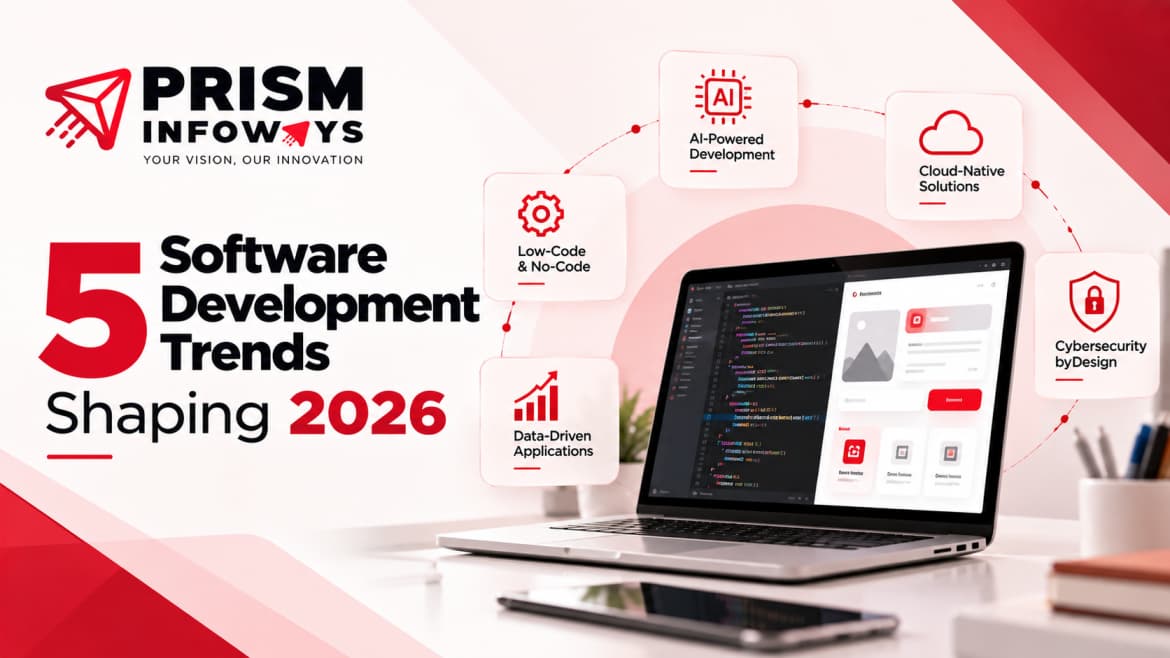
Discover the top 5 software development trends shaping 2026, from AI-powered development to edge computing.
As software development continues to evolve, staying ahead means understanding which trends are actually changing how teams build — not just industry buzzwords. Here are five trends genuinely shaping software development in 2026:
1. AI-Powered Development
AI has moved beyond simple autocomplete. Tools like GitHub Copilot and ChatGPT are now used for generating boilerplate code, catching bugs before code review, and even suggesting architecture patterns based on existing codebases. Teams using AI-assisted development report faster iteration cycles, though human review remains essential for production-critical logic.
2. Low-Code and No-Code Platforms
Platforms like Bubble, Retool, and Microsoft Power Apps are letting business teams build internal tools — inventory dashboards, approval workflows, simple CRMs — without waiting weeks for developer bandwidth. The trend isn't replacing custom development; it's freeing up engineering teams to focus on complex, differentiated product work instead of internal tooling.
3. Microservices Architecture
Breaking monolithic systems into independently deployable services makes sense for teams scaling past a certain complexity threshold — but it adds operational overhead (service discovery, distributed tracing, inter-service communication) that isn't worth it for smaller applications. The trend in 2026 is more nuanced: teams are adopting a "modular monolith first, microservices when needed" approach rather than defaulting to microservices from day one.
4. Security-First Development
With supply chain attacks and dependency vulnerabilities becoming more common, security can no longer be a final-stage checklist. Practices like automated dependency scanning, SAST (static application security testing) integrated into CI/CD pipelines, and secrets management are becoming standard rather than optional add-ons.
5. Edge Computing
For IoT devices, real-time applications, and latency-sensitive use cases, processing data closer to its source — rather than round-tripping to a centralized cloud server — significantly cuts response times. This matters especially for applications like predictive maintenance systems and real-time monitoring dashboards.
At Prism Infoways, we evaluate which of these trends actually apply to a specific project — not every trend fits every use case. If you're weighing whether microservices makes sense for your application, or how to integrate AI tooling into your existing development workflow, we're happy to walk through the specifics.
Need Expert IT Solutions?
Ready to transform your business? Team up with Prism Infoways and harness the right technology for your growth — not just what's trending.
Need Expert IT Solutions?
Ready to transform your business? Team up with Prism Infoways and harness cutting-edge technology for your growth.
Contact Us